

Hip Arthroscopy
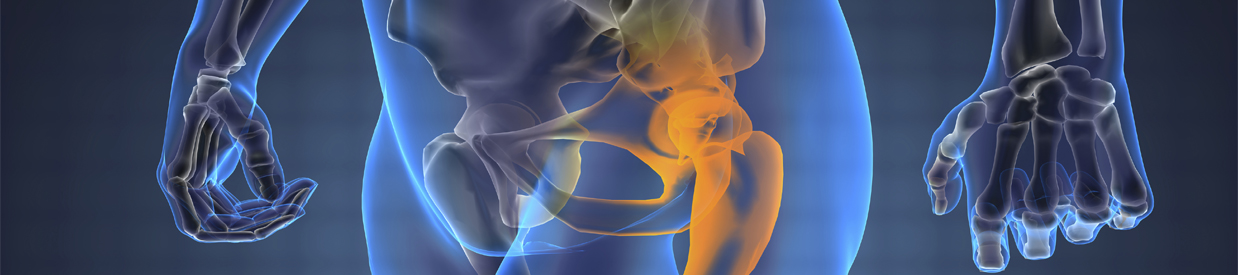
Our Dr. Laith Farjo explains more about hip arthroscopy below.
What is hip arthroscopy?
Arthroscopy of the hip uses specialized arthroscopic instruments to treat various unusual disorders of the hip. To view videos of hip surgeries, please visit our Video Library.
What procedures can be performed in the hip arthroscopically?
The primary indications for hip arthrsocopy are removal of loose bodies (usually cartilage), debridement/repair of labral tears (the labrum is an O-ring of cartilage around the hip socket), removal of bone spurs that cause hip pain (femoral or acetabular spurs), removal of pathologic synovium (joint lining), and in certain circumstances, for early stages of hip arthritis. In addition, sometimes hip arthroscopy can provide a diagnosis when other means (e.g., MRI) fail. Hip arthroscopy with thermal shrinkage has proved useful in persons with instability of the hip. The most exciting new use of hip arthroscopy is to treat a problem called femoroacetabular impingement, which is the removal of painful bone spurs around the hip.
How does my doctor decide if I need this surgery?
Usually, this surgery is indicated in people who have pain that can be localized to the hip, but with minimal findings on x-ray. As such, many of these problems can be hard to define, and patients occasionally go months to years without a specific diagnosis, especially if the physician does not have a lot of experience with these diseases. Some diagnoses (synovial chondromatosis, polyvillonodular synovitis) can be made using special studies like CT scans or MRIs. Other problems, such as tears of the acetabular labrum, might not show up on any of the tests and can only be diagnosed with physical examination, listening to the patient history, and exclusion of other diseases.
Why don't more surgeons perform this procedure?
The indications for it are quite limited, i.e., there aren't that many patients who need this surgery. In addition, it is more difficult than arthroscopy of the knee or shoulder because the hip is more deep, surrounded by important nerves, and is therefore harder to access. Finally, special instruments are needed to do the procedure. For these reasons, most orthopedic surgeons do not have much, if any, experience with this procedure.
How is hip arthroscopy performed?
The patient, after being anesthetized, is placed in traction on a specialized operating room table. The traction is necessary to pull the hip apart slightly to allow us to insert instruments into the joint safely, without injuring the cartilage. All this is done with the help of a portable x-ray machine to make sure the instruments are positioned correctly. A pump device is used to fill the joint with saline. Then an arthroscope is used to view the joint; once a problem is identified, it is treated with a variety of instruments. For example, tears of the labrum may be trimmed with a special device called a motorized shaver, or may be repaired by placing sutures around the labrum. Bone spurs can also be removed with specialized minimally invasive instrumentation.
What are the risks of hip arthroscopy?
Probably the most common risk is injury to the articular cartilage of the hip by the instruments used to perform arthroscopy. While this can happen with arthroscopy of any joint, it is more common in arthroscopy of the hip because the joint is more "tight" and difficult to access. This injury, however is almost always minor and inconsequential (because the instruments we use are relatively small and the cartilage of the hip joint is quite thick). Swelling is also a common occurrence; this usually resolves within a week. Nerve injuries can occur because of the traction used in surgery, however, usually these injuries are not permanent. With modern instrumentation, and an experienced surgeon, the complication rate of this procedure is very low.
What is the success rate of the surgery?
That depends on the diagnosis that is being treated. Our current research indicates that treatment for loose bodies (trauma, synovial chondromatosis) has excellent results and arthroscopy for labral tears has good results if there is only minimal arthritis present. Results for treatment of arthritis are less promising, however, with only a subgroup of patients receiving adequate relief of pain, usually these patients benefit more from a hip replacement. Patients with arthritis who benefit from this procedure typically have very mild arthritis, usually with some other problem, such as a labral tear. There has been extensive new medical data to support the use of hip arthroscopy for femoroacetabular impingement (bone spurs - "cam" or "pincer"). In most cases, arthroscopy can be used to treat this condition as successfully as major open surgery with much less side effects (shorter surgery, less pain, smaller scars, no need to dislocate the hip, no need for permanent metal devices to be placed in the hip).
What is the recovery from hip arthroscopy?
Most patients have the surgery performed on a same day basis with no overnight stay in the hospital required. Often patients are able to tell that night or the next day that their hip feels better. This is usually followed by a recurrence of the pain, which lasts a few weeks, then gradual resolution of the pain over the course of up to 3-4 months (although many recover fully sooner). This recurrence is usually from bleeding into the joint after surgery causing irritation of the joint lining. Patients are given crutches in the hospital and are allowed to weight-bear partially, depending on the procedure. For example, Dr. Farjo frequently asks patients to only bear 50% of their body weight on the affected hip for 1-2 weeks after surgery to allow the hip to heal after procedures such as bone spur removal. Usually, physical therapy is not needed. Swelling around the hip, groin, and leg resolve usually within a week. Sometimes, your knee might feel sore - because we pulled traction on your hip via your foot, it necessarily pulls on your knee also. This discomfort, if present, is also temporary.
What experience does Advanced Orthopedic Specialists have with hip arthroscopy?
Dr. Farjo trained with the physicians who helped develop and popularize hip arthroscopy in the 1990s. Since then, he has extensively performed, researched, lectured, and published about hip arthroscopy, including its use in the treatment of labral tears, debridement of arthritis of the hip, femoroacetabular impingement, and general outcomes of the procedure. He is one of the few surgeons in Michigan to regularly perform hip arthroscopy. Read more about his research below:
- Hip Arthroscopy for Labral Tears
- Hip arthroscopy for Degenerative Joint Disease (arthritis)

Our Technology
It may come as a surprise to most people, but much of innovation in the field of orthopedic surgery happens in private practices such as ours, not in universities. Our surgeons utilize the most advanced technologies in treating your problem. They are experts in the field of joint replacement, arthroscopy, foot and ankle surgery, and sports medicine.
Learn More

